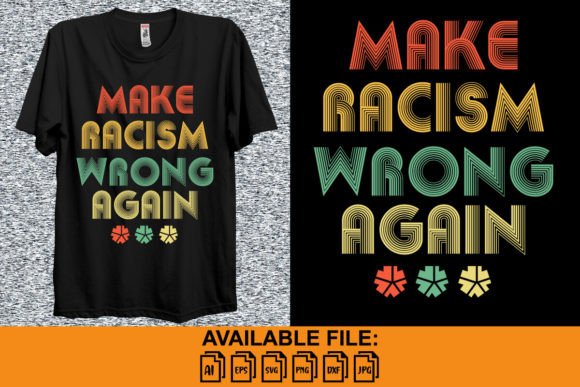
Designing with Purpose: The "Make Racism Wrong Again" Concept
Sometimes a design concept transcends mere aesthetics and becomes a statement. The "Make Racism Wrong Again" shirt design is one of those powerful ideas that carries significant weight, combining bold typography with an unmistakable message. For designers, small business owners, and content creators who want to incorporate meaningful social commentary into their work, this particular design asset offers a compelling blend of visual impact and purposeful messaging that resonates across multiple platforms and applications.
Understanding the Visual Appeal and Design Elements
What makes this design concept work so effectively? It starts with the typography choices. The lettering style draws from classic, bold display fonts that command immediate attention—think strong sans serif characteristics with slightly condensed proportions that create urgency and weight on the page or fabric. The words carry inherent rhythm and balance, making the phrase naturally suited for merchandise, posters, and social media graphics where quick readability matters.
The visual structure follows proven design principles. Each word carries equal visual weight, creating a balanced composition that works across different sizes and applications. Whether you're scaling this design for a small embroidery project or enlarging it for a banner, the proportions hold up remarkably well. The spacing between letters and words has been carefully considered to ensure legibility at various dimensions, which is exactly what you need when working with cutting machines and different material types.
Practical Applications Across Your Creative Projects
Here's where this design asset really shines in terms of versatility. The file package includes AI, EPS, SVG, DXF, JPG, and PNG formats, which means you're equipped for virtually any production method or creative application you can imagine.
For merchandise and apparel: The SVG and DXF files work beautifully with electronic cutting machines like Cricut and Silhouette, allowing you to create iron-on vinyl designs, screen print separations, or heat transfer applications. Small business owners running print-on-demand shops or local apparel lines will find this particularly valuable for adding socially conscious designs to their product catalogs without starting from scratch.
For digital marketing and social media: The PNG files with transparent backgrounds drop seamlessly into Instagram stories, Facebook posts, Twitter graphics, and Pinterest pins. Content creators who focus on social justice topics, community building, or advocacy work can incorporate this design into their visual content strategy while maintaining brand consistency across platforms.
For print materials and event promotion: Community organizations, nonprofits, and event planners working on rallies, fundraisers, or awareness campaigns will find the high-resolution files suitable for poster printing, flyer design, and promotional materials. The EPS and AI vector formats ensure clean output at any size, from business cards to large-format banners.
For packaging and branded merchandise: If you're building a brand around social consciousness or advocacy, this design concept can anchor your visual identity on tote bags, stickers, mugs, and other branded items. The bold, straightforward typography communicates your values immediately to potential customers and supporters.
Making Typography Work for Your Message
When working with design concepts that carry strong social messages, your typography choices become even more critical. The "Make Racism Wrong Again" design succeeds because it uses type as both a visual element and a communication tool. Here are some practical considerations for incorporating similar approaches into your own projects:
- Readability across mediums: Test your designs at multiple sizes before committing to production. What looks great on your computer screen might lose definition when cut from vinyl or printed on textured fabric. Run test cuts or prints at the smallest and largest sizes you plan to use.
- Color and contrast planning: Think about your end applications early in the process. A design that works in black on white might need adjustments for light colors on dark backgrounds. Having vector files gives you the flexibility to modify colors easily for different production runs.
- File format selection: Use SVG and DXF files for cutting machine projects where clean, scalable paths matter most. Reserve AI and EPS files for design modifications in professional software. JPG and PNG files serve digital applications where quick implementation takes priority over editability.
- Spacing and alignment: When applying designs to physical products, account for material limitations. Vinyl cutting, for example, requires minimum spacing between design elements to ensure clean cuts and easy weeding.
Building Brand Identity Around Purposeful Design
For entrepreneurs and small business owners in the advocacy space, your design assets become extensions of your brand identity. The typography you choose, the visual weight of your graphics, and the overall aesthetic of your materials all contribute to how audiences perceive your message and your organization.
Consider how this design concept might fit into a broader visual system. You might pair it with complementary typefaces for supporting text, develop a consistent color palette that reinforces your message, or create variations that work across different product categories. The goal is visual consistency that builds recognition over time—when someone sees your materials, they should immediately connect them to your values and mission.
Professional presentation matters even in grassroots advocacy work. Clean, well-executed designs communicate seriousness and credibility. Sloppy typography or poorly prepared files can undermine an otherwise powerful message. Taking the time to work with properly formatted design assets, understanding your production requirements, and testing your outputs before large-scale production all contribute to more effective communication.
Working with Electronic Cutting Machines and Design Files
If you're new to working with design files for cutting machines, the included format variety gives you room to learn and experiment. SVG files are generally the go-to format for most cutting software because they maintain clean vector paths that translate well to cutting instructions. DXF files serve as a reliable alternative, particularly for Silhouette Studio users working with the basic software version.
Before starting any project, import your chosen file into your cutting software and examine the design paths. Look for any overlapping elements, stray points, or complex intersections that might cause cutting issues. Clean vector files should show smooth, continuous paths that your machine can follow without hesitation or error.
Material selection also influences your approach. Heat transfer vinyl for apparel requires you to mirror your design before cutting, while adhesive vinyl for signs and decals does not. Different vinyl thicknesses and textures may require blade pressure and speed adjustments. Running a small test cut before committing to your final material saves both time and supplies.
The "Make Racism Wrong Again" shirt design represents more than just another graphic—it's a conversation starter, a statement piece, and a versatile design asset that serves creators who want their work to mean something beyond pure aesthetics. Whether you're building a product line, creating content for advocacy campaigns, or simply expressing your values through handmade projects, having quality design files in multiple formats puts the creative control firmly in your hands.